Walk into any supply closet — healthcare, food service, automotive, or beauty — and you'll find a box of disposable gloves. The question is: are they the right gloves for the job?
Choosing between nitrile, vinyl, and latex isn't just a materials science exercise. It's a decision with real consequences: a latex allergy in the wrong setting can send someone into anaphylaxis, while using chemical-resistant nitrile gloves to hand out sandwiches is a waste of money. This guide breaks down everything you need to know to make the right call for your operation.
The three contenders
Before diving into comparisons, let's understand what these gloves are actually made of — and why it matters for your purchasing decisions.
🟢 Nitrile gloves — the all-rounder
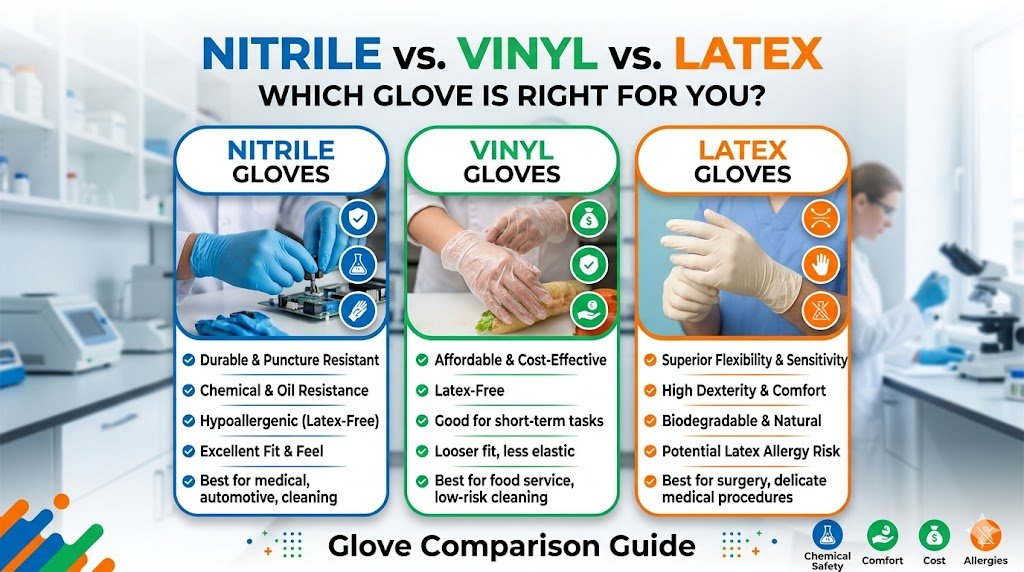
Nitrile is a synthetic rubber compound (acrylonitrile butadiene) engineered to outperform natural rubber in most industrial and medical scenarios. They're latex-free, highly resistant to punctures, and offer excellent chemical resistance. Nitrile has become the dominant choice in healthcare, labs, and any environment where durability and allergy safety are non-negotiable.
- Best for: Healthcare, automotive, labs, chemical handling
- Cost: Medium to high
- Allergy risk: None
- Durability: Excellent — highest puncture resistance of the three
🟡 Vinyl gloves — the budget choice
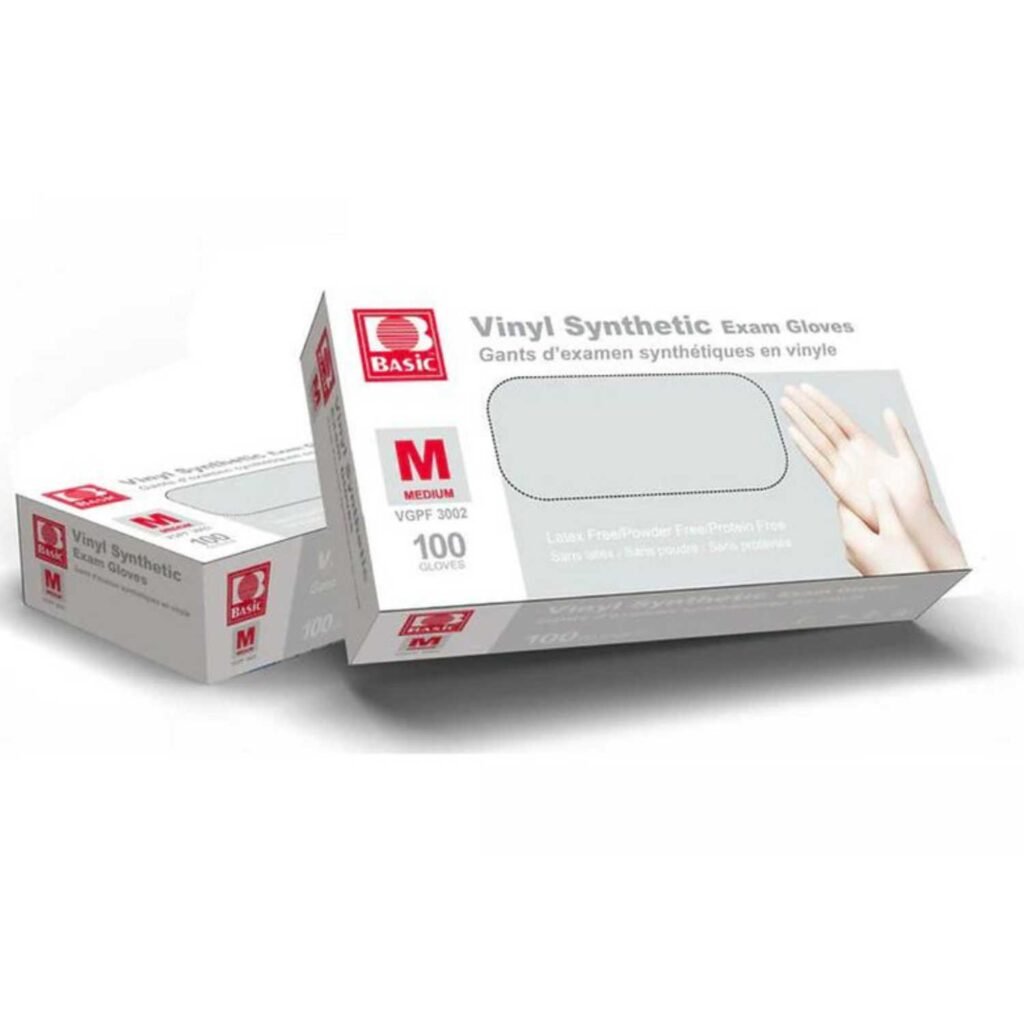
Made from polyvinyl chloride (PVC) and plasticizers, vinyl gloves are the most affordable option on the market. They're loose-fitting and best suited for low-risk, short-duration tasks where a basic physical barrier matters more than chemical protection. Common in food service and light janitorial work.
- Best for: Low-risk food handling, light cleaning, reception and retail
- Cost: Lowest — best price per glove
- Allergy risk: None
- Durability: Poor — not for chemical or puncture resistance
Recommended Vinyl product:
🩷 Latex gloves — the dexterity champion
Harvested from rubber trees (Hevea brasiliensis), natural latex has been the gold standard in medical gloves for over a century. Its elastic memory and tactile sensitivity remain unmatched — but so does its allergy risk. In many facilities, latex has been phased out entirely due to liability concerns.
- Best for: Dental, surgery, tattoo, fine motor precision tasks
- Cost: Low to medium
- Allergy risk: High — affects 1–6% of the general population
- Durability: Good — but degrades faster than nitrile
Head-to-head comparison
Here's how the three materials stack up across the factors that matter most when buying in bulk.
| Factor | Nitrile | Vinyl | Latex |
|---|---|---|---|
| Allergy risk | None ✅ | None ✅ | High ⚠️ |
| Puncture resistance | Excellent | Poor | Good |
| Chemical resistance | Excellent | Poor | Moderate |
| Tactile sensitivity | Good | Poor | Excellent |
| Fit & comfort | Excellent | Loose | Excellent |
| FDA exam-grade approval | Yes | No | Yes |
| Relative cost (bulk) | Medium | Lowest | Medium |
| Shelf life | 5 years | 3 years | 3 years |
| Biodegradable | No | No | Yes |
Which industry should use which glove?
The "best" glove depends entirely on your use case. Here's a practical breakdown by sector.
Healthcare & laboratories → Nitrile
Latex-free environments are now mandatory in most healthcare facilities. Nitrile provides the puncture resistance, chemical barrier, and FDA exam-grade certification required. Choose 4–6 mil for general exams; go thicker for procedures involving sharps or hazardous chemicals.
Food service → Vinyl (light tasks) or Nitrile (prep work)
For low-contact tasks like cashiering, plating, or deli service, vinyl's cost efficiency and ease of change make it a sensible choice. For prep work involving cuts, hot food, or raw proteins, step up to nitrile for better barrier protection and grip.
Automotive → Nitrile only
Solvents, oils, fuels, and brake fluid require genuine chemical resistance. Only nitrile holds up in these environments — and you'll want thicker mil gauges (8 mil+) for heavy mechanical work. Vinyl disintegrates on contact with many automotive chemicals.
Dental & surgery → Latex or Nitrile
Latex remains preferred in precision surgical settings for its unmatched tactile sensitivity. However, screen all staff and patients before using latex — and have nitrile available as an immediate fallback. Many practices have gone fully latex-free to eliminate the risk entirely.
Beauty & tattoo → Latex or thin Nitrile
Close-contact precision work benefits from latex's second-skin fit and sensitivity. If any client allergy risk exists, thin nitrile exam gloves (3–4 mil) are an excellent substitute without sacrificing much dexterity.
The latex allergy reality: Roughly 1–6% of the general population has a latex sensitivity — rising to 8–12% among healthcare workers with repeated exposure. If your team works in any patient-facing or public-facing capacity, a latex-free policy may be a legal liability issue, not just a courtesy.
Understanding thickness: mil gauge explained
All three glove types come in different thicknesses, measured in mil (thousandths of an inch). This matters as much as the material choice.
- 3–4 mil (exam-weight): Light, sensitive, best for medical exams, food handling, and precision tasks. Excellent tactile feel, faster to tear under rough use.
- 5–6 mil (standard duty): The most common thickness for general-purpose use. Balances durability and dexterity. A smart bulk-purchasing default for most businesses.
- 8 mil+ (heavy duty): For automotive, chemical handling, or sharp-object tasks. Better puncture and chemical resistance, with some sacrifice in sensitivity. Often labeled "mechanic grade."
What to ask your supplier before buying in bulk
When you're sourcing hundreds of boxes at a time, the fine print matters. Before placing a large order, confirm the following:
- Certification status. Are the gloves FDA 510(k) cleared for exam use? Do they meet ASTM D6319 (nitrile) or ASTM D3578 (latex) standards? For food service, are they FDA food-contact compliant?
- Powder-free or powdered. Powdered gloves (cornstarch) are easier to don but can contaminate wounds and food. Most medical and food facilities require powder-free. Confirm before ordering.
- Accelerator-free options. Some nitrile gloves use chemical accelerators that can cause Type IV allergic reactions. If staff have chemical sensitivities, ask for accelerator-free nitrile specifically.
- Textured vs. smooth. Fingertip-textured gloves significantly improve grip in wet environments. For labs, food prep, or mechanical work, always choose textured fingertips.
- Size range. Ill-fitting gloves are worn less consistently and removed less carefully — two major sources of cross-contamination. Stock at minimum S, M, L; ideally XS through XL.
The bottom line
There's no universally correct answer — but there are clear wrong answers. Vinyl in a medical exam room, latex in a latex-sensitive workplace, or flimsy 3-mil gloves in an automotive shop all create real risk.
As a rule of thumb: when in doubt, default to nitrile. It costs slightly more than vinyl, but covers more use cases, carries no allergy risk, and holds up in higher-risk environments. Think of it as the versatile middle ground that almost never lets you down.
Use vinyl where the task is truly light, exposure risk is minimal, and cost control is the primary driver. And use latex only in specialized precision settings — where you've confirmed there's no allergy risk in the room.
Need help finding the right gloves for your operation? Browse our full catalog by material, thickness, and industry application — with bulk pricing available from 10 cases and up.
Products by Category
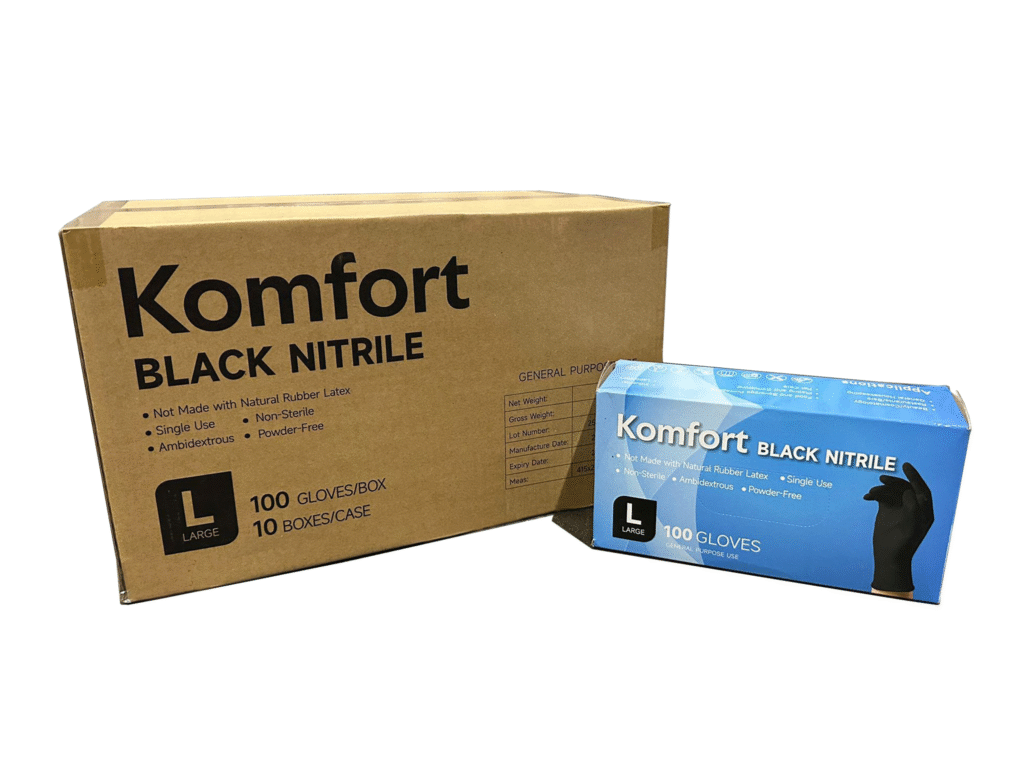
6 Mil Black Nitrile Gloves – Komfort
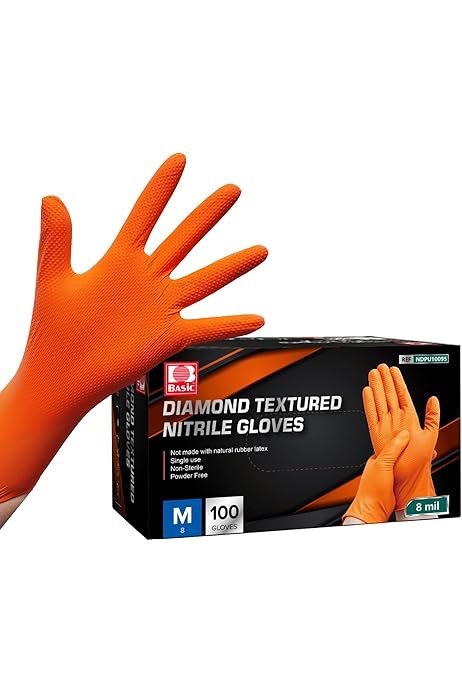
Original price was: $130.00.$110.00Current price is: $110.00.8 Mil Heavy Duty Diamond Textured Industrial Nitrile Gloves
Original price was: $150.00.$135.00Current price is: $135.00.

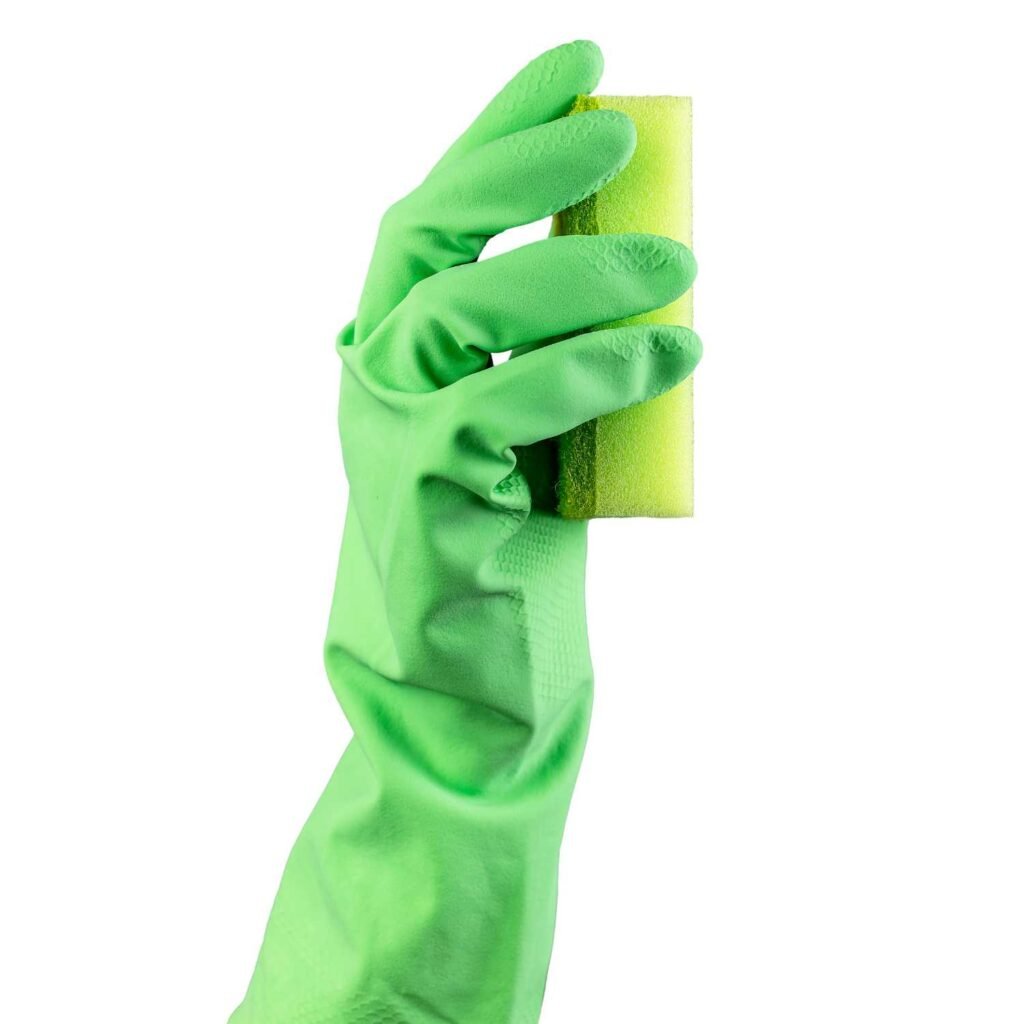
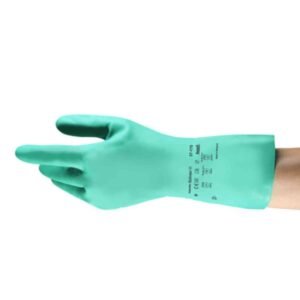
Dish Washing Gloves (Green)
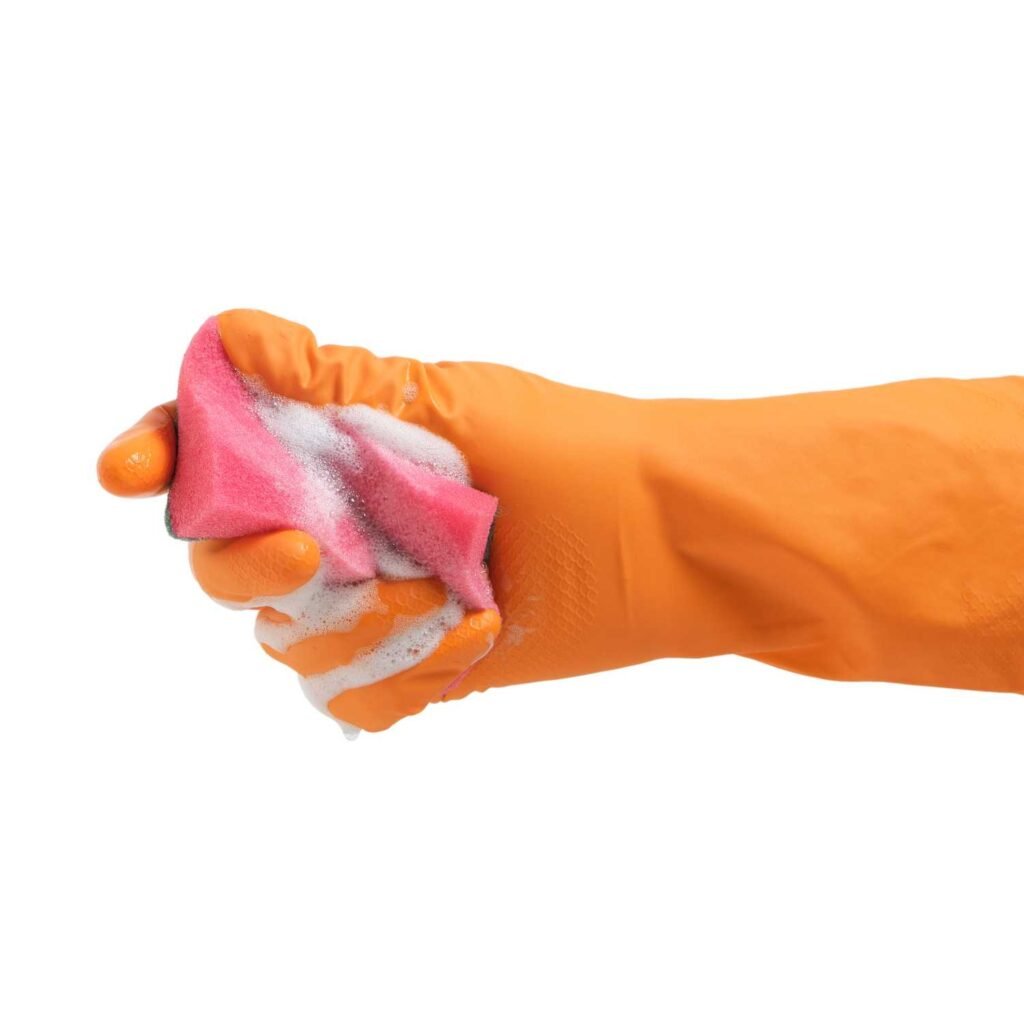
$45.00Dish Washing Gloves (Orange)
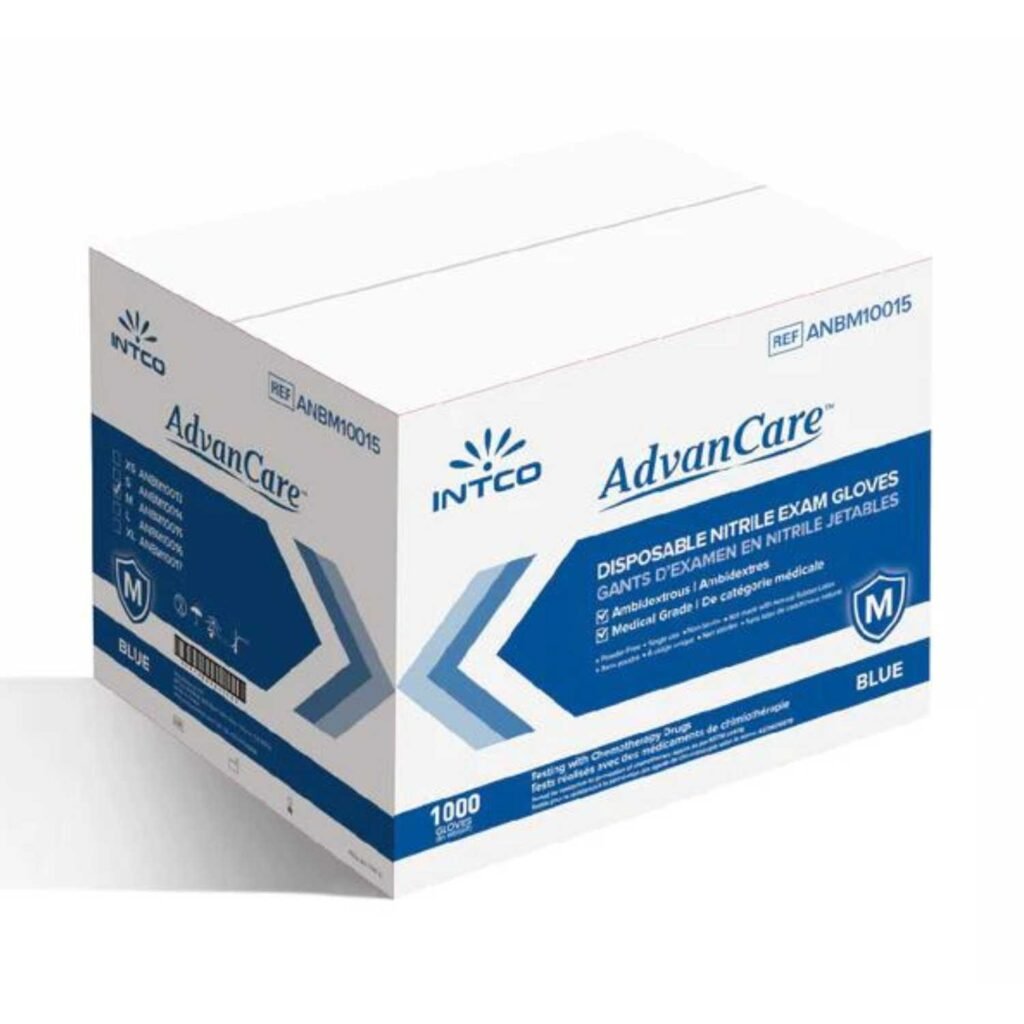
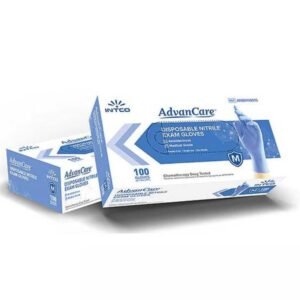
$45.00Nitrile Blue Gloves Examination 3.5 Mil Powder Free- Advancare
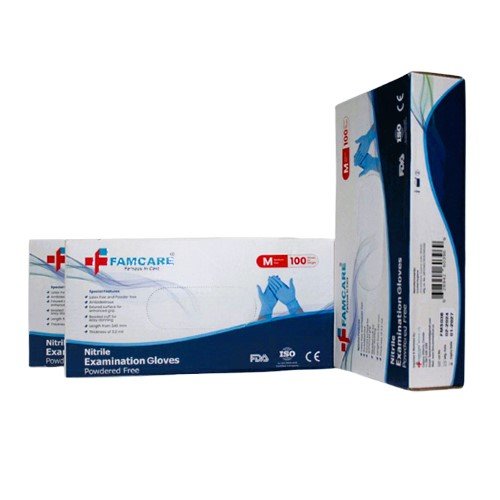
$75.00Nitrile Gloves 3.2 Mil 2000 gloves – Famcare Medical
Original price was: $140.00.$120.00Current price is: $120.00.
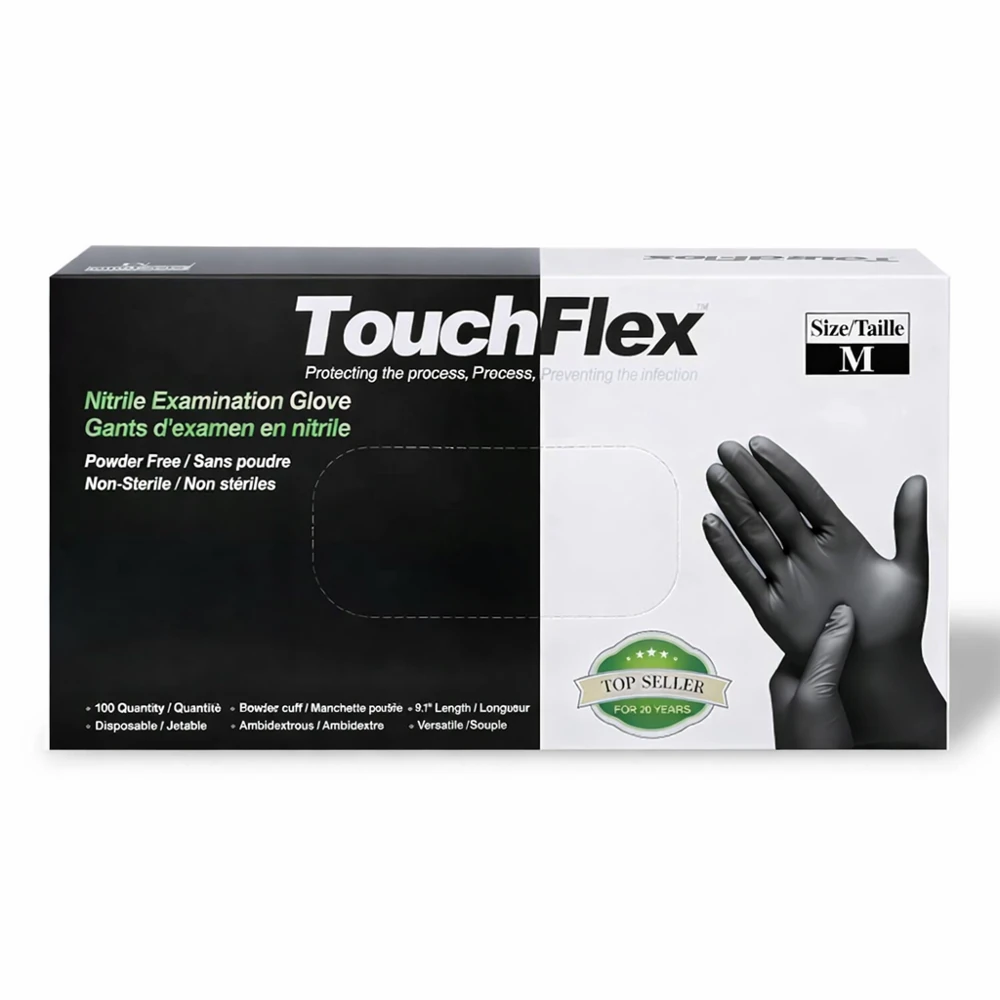
Nitrile Gloves 5 Mil Blue & Black – Touchflex
$90.00
Polyethylene – Clear Embossed Poly Gloves – AMD Ritmed Medicom (10000)
$125.00Vinyl Gloves Synthetic Exam 5 Gram
$60.00